Schools and Education in Orleans
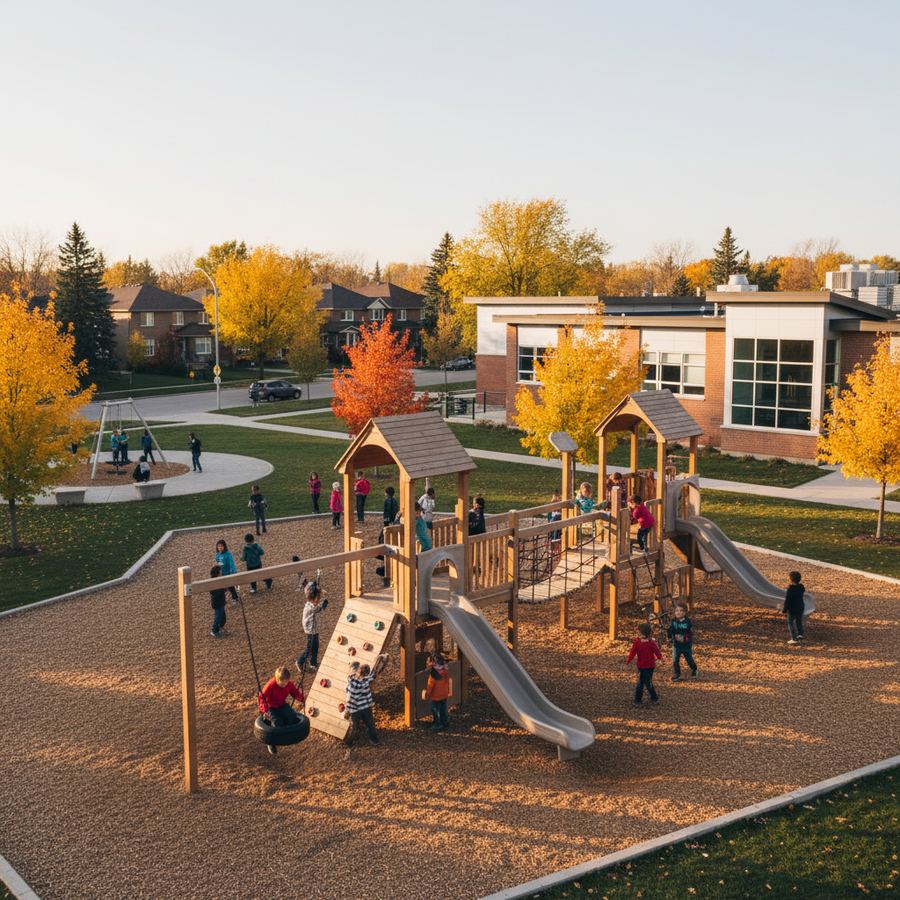
Schools are one of the primary reasons families choose Orleans. The community is served by four publicly funded school boards, offering education in both English and French, in both secular and Catholic traditions. This means parents have genuine choice when it comes to their children's education, and the quality across all four systems is generally strong. Understanding how the school boards work, what options are available, and how to register is essential for any family moving to or living in Orleans.
The Four School Boards
Ontario's publicly funded education system is divided along language and religious lines, resulting in four school boards that all operate schools in Orleans. Each board is fully funded by the province and charges no tuition for eligible students.
Ottawa-Carleton District School Board (OCDSB): This is the English public school board. It operates the largest number of schools in the Ottawa area and runs several elementary and secondary schools in Orleans. The OCDSB offers both regular English-language programming and French immersion, which is available at most Orleans schools starting in Grade 1 (Early French Immersion) or Grade 4 (Middle French Immersion). The board's Orleans-area secondary schools include Cairine Wilson Secondary School, which is well-regarded and offers a range of programs.
Ottawa Catholic School Board (OCSB): The English Catholic board operates elementary and secondary schools across Orleans. Students must be Catholic (or have a Catholic parent or guardian) to attend, though non-Catholic students may be admitted at the secondary level if space is available. The OCSB also offers French immersion programming at many of its schools. Lester B. Pearson Catholic High School is one of the board's secondary schools serving Orleans.
Conseil des ecoles publiques de l'Est de l'Ontario (CEPEO): This is the French public school board. It operates French-language schools where all instruction is in French. These schools serve the francophone community and are open to students who have French-language education rights under Section 23 of the Canadian Charter of Rights and Freedoms. In practice, this includes children whose parents were educated in French in Canada, among other criteria. The CEPEO operates several schools in Orleans, reflecting the community's strong francophone population.
Conseil des ecoles catholiques du Centre-Est (CECCE): The French Catholic board is the largest French-language school board in Ontario and has a significant presence in Orleans. Like the CEPEO, admission requires French-language education rights, and the instruction is entirely in French within a Catholic faith tradition. The CECCE operates numerous elementary and secondary schools in Orleans and is a central institution in the francophone community.
French Immersion: What You Need to Know
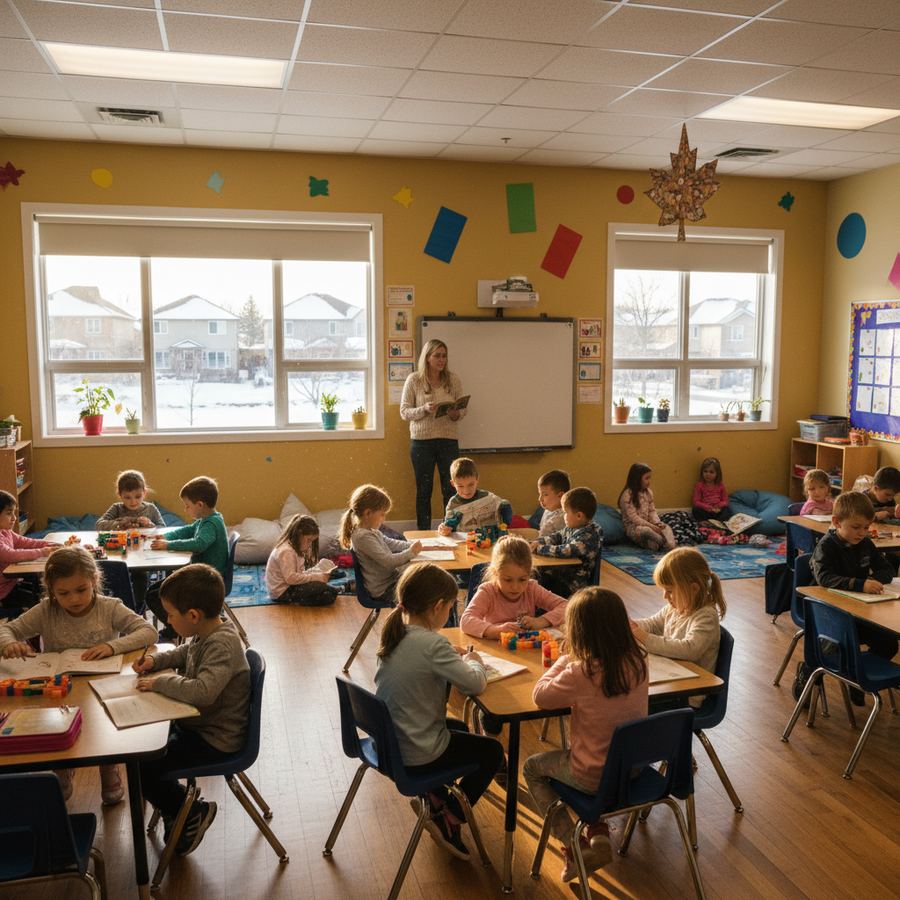
French immersion is enormously popular in Orleans, and it is one of the community's distinct educational advantages. Living in a genuinely bilingual community means that children in immersion programs can practice their French not just at school but in everyday life: at the grocery store, the hockey rink, and in conversations with neighbours. This reinforcement outside the classroom makes immersion more effective here than in communities where French is rarely heard.
Both the OCDSB and the OCSB offer French immersion at their Orleans schools. Early French Immersion typically begins in Grade 1, with approximately half the instruction delivered in French. By the time students reach the intermediate grades, the proportion of French instruction gradually decreases, but students emerge with functional bilingualism that serves them well in higher education and the workforce. Middle French Immersion, starting in Grade 4, is also available at some schools for families who prefer a later entry point.
Demand for French immersion spaces in Orleans is high. Registration typically opens in the winter for the following September, and popular schools can fill up. It is worth checking with your preferred school board well in advance of your planned registration date to understand timelines and catchment area rules. Transportation to immersion schools is provided by the school boards, though your child may be assigned to a school outside your immediate neighbourhood if the closest immersion program is full.
Choosing a School Board
For families new to Orleans, the choice between school boards can feel overwhelming. Here are the key factors to consider:
Language of instruction: If you want your child educated entirely in French, the CEPEO or CECCE is the natural choice, provided you have French-language education rights. If you want English-language education with strong French exposure, the OCDSB or OCSB French immersion programs are the route. If you prefer English-language education without immersion, the regular English programs at OCDSB and OCSB schools are available.
Religious education: The Catholic boards (OCSB and CECCE) include religious instruction and observance as part of the school program. If this aligns with your family's values, it can be a positive factor. If not, the public boards (OCDSB and CEPEO) offer secular programming.
Location: Check which schools are in your catchment area. In some parts of Orleans, the closest school for a particular board may be further away than expected, which affects daily logistics. Use the school locator tools on each board's website to find your designated school.
Programs and specializations: Some Orleans schools offer specialized programs, extended day options, or particular extracurricular strengths. Visiting schools and attending open houses (typically held in winter) is the best way to gauge which school fits your child.
How to Register
Registration processes are similar across all four boards but are handled separately by each. You will generally need:
Your child's birth certificate or proof of age. Proof of address in Orleans (a utility bill, lease, or property tax bill). Immunization records (required by Ottawa Public Health). Proof of Canadian citizenship, permanent residency, or immigration status. For Catholic boards: a baptismal certificate or letter from a parish. For French-language boards: documentation of French-language education rights.
Registration for new students typically happens in February and March for the following September, but schools accept registrations year-round for families moving mid-year. Contact the school directly or visit the board's website to start the process. Most boards now offer online pre-registration.
Notable Schools in Orleans
Orleans has dozens of schools across the four boards. While we are not in the business of ranking schools, here are a few that are frequently mentioned by local families:
Cairine Wilson Secondary School (OCDSB): A large English public secondary school on Orchardview Avenue with a wide range of academic programs, French immersion at the secondary level, and strong extracurricular activities including athletics and arts.
Lester B. Pearson Catholic High School (OCSB): An English Catholic secondary school on Innes Road known for its academic programs and community involvement.
College catholique Mer Bleue (CECCE): A French Catholic secondary school that serves the francophone community in southeast Orleans.
Ecole secondaire publique Gisele-Lalonde (CEPEO): A French public secondary school on Millennium Boulevard offering a range of programs for francophone students.
At the elementary level, school quality tends to be consistently solid across Orleans, with variation driven more by individual school culture and leadership than by systemic differences between boards. Talking to other parents in your neighbourhood is often the most useful way to get a sense of local school quality.
Before and After School Care
Many Orleans schools offer before and after school programs through licensed providers. These programs typically run from 7:00 a.m. until the start of school and from dismissal until 6:00 p.m. Availability and cost vary. For families with young children, this care is essential for managing work schedules, and spots can fill quickly. Register early, particularly for September start dates.
Private daycares, home-based childcare providers, and early learning centres are also distributed throughout Orleans. The City of Ottawa maintains a registry of licensed childcare providers that you can search by postal code.
Post-Secondary and Continuing Education
Orleans does not have a university campus, but post-secondary options are accessible. The University of Ottawa and Carleton University are both reachable within thirty to forty minutes by car or transit. La Cite collegiale, a French-language college, has its main campus on the eastern edge of Ottawa and is convenient for Orleans residents. Algonquin College is further west but accessible by transit. The community recreation centres and the Ottawa Public Library's Orleans branch also offer continuing education courses and programming for adult learners.
Education and Community
Schools in Orleans are more than educational institutions. They function as community hubs, particularly at the elementary level. School-based events, fundraisers, concerts, and sports activities bring families together and build the social networks that make a neighbourhood feel like home. For newcomers to Orleans, engaging with your child's school community is one of the most effective ways to integrate into local life. Volunteer at the school council, attend the fall barbecue, and show up to the spring concert. The connections you make there will extend well beyond the school gates.
If you are still evaluating Orleans as a place to raise a family, the family-friendly community guide and the neighbourhood profiles provide additional context on what makes this community work for families with children.