The Bilingual Advantage
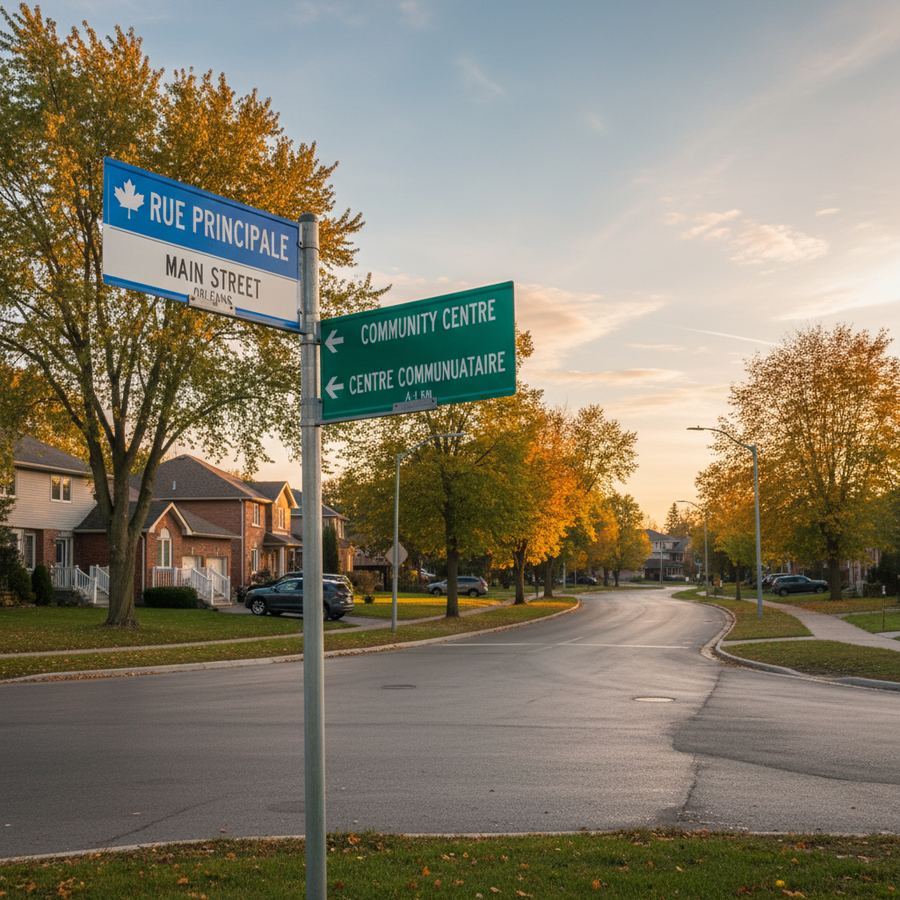
Orleans is not just a bilingual community on paper. It is one of the few places in Ontario where French and English genuinely coexist in daily life. You hear both languages at the grocery store, the hockey rink, the school pickup line, and across the counter at local businesses. For many residents, switching between French and English is so natural it happens mid-sentence without a second thought. This bilingual character is one of Orleans' most distinctive features, and for families, professionals, and business owners, it creates advantages that are hard to replicate elsewhere in the province.
How Orleans Became Bilingual
The roots of bilingualism in Orleans go back to the community's origins. Before the suburban development that transformed the area beginning in the 1960s and 1970s, Orleans was a small francophone village in what was then Gloucester Township. As Ottawa's east end grew, francophone families from the National Capital Region settled here in large numbers, establishing schools, churches, and community organizations in French. At the same time, anglophone families were moving in as well, drawn by the same affordable housing and proximity to downtown Ottawa that attract newcomers today.
The result, over several decades, was a community where neither language dominated entirely. Unlike many parts of Ontario where French is present mainly in government services, Orleans developed an organic bilingualism rooted in everyday interaction. The 2021 census data shows that roughly 40 percent of Orleans residents have French as a first language, and a much larger share can function in both languages. This is a dramatically higher rate of French-language presence than anywhere else in the Ottawa suburbs, and it shapes everything from the school system to the restaurant menus.
Bilingualism and Education
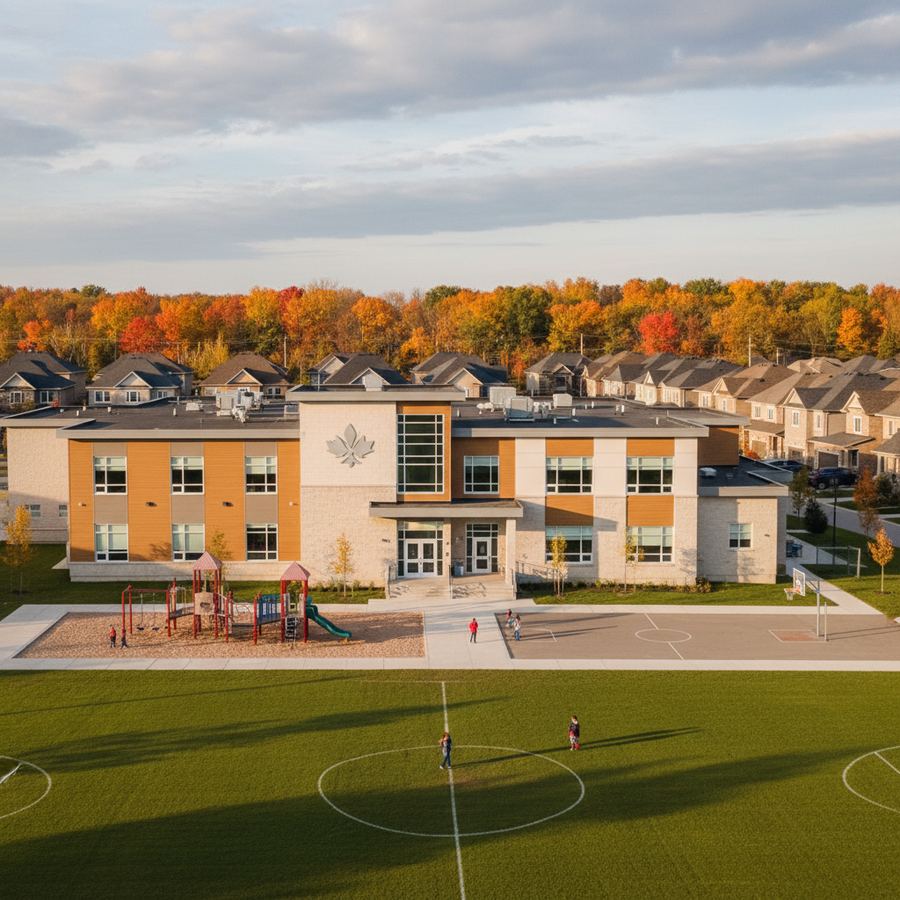
The educational landscape in Orleans reflects and reinforces the bilingual culture. The community is served by all four publicly funded school boards: two English (public and Catholic) and two French (public and Catholic). This means families can choose to educate their children entirely in French, entirely in English, or through French immersion programs offered by the English-language boards.
French immersion is exceptionally popular in Orleans, and it tends to be more effective here than in communities where French is rarely heard outside the classroom. Children enrolled in immersion at an Orleans school have the unusual advantage of being surrounded by French in their daily environment. Their friends' parents may speak French, the lifeguard at the pool may address them in French first, and the signs in local shops are often bilingual. This ambient exposure reinforces classroom learning in a way that purely school-based immersion cannot match.
For francophone families, the availability of high-quality French-language schools from kindergarten through secondary school means children can be educated entirely in French without compromising on program quality or variety. The CECCE (French Catholic board) is the largest French-language school board in Ontario and has a strong presence in Orleans, as does the CEPEO (French public board). These schools serve not only established francophone families but also newcomers from French-speaking countries who want their children educated in their home language.
Career and Employment Advantages
Living in a bilingual community has direct career benefits, particularly in the National Capital Region. The federal government, the largest employer in the Ottawa-Gatineau area, requires bilingualism for a significant proportion of its positions. Employees who can work in both French and English have access to more job opportunities, faster advancement, and greater flexibility in the positions they can fill. Orleans is home to a large number of federal public servants, and the bilingual environment of the community prepares residents, including children growing up here, for this employment landscape.
Beyond the federal government, bilingualism is an asset in the private sector as well. Businesses operating in the National Capital Region frequently serve clients in both languages, and employees who can do so are valued. In fields like health care, education, law, finance, and customer service, French-English capability opens doors that monolingual candidates cannot access. For professionals relocating to Orleans from elsewhere in Ontario or from outside the region, the opportunity to develop or strengthen French skills while living in a supportive environment is a genuine career investment.
Bilingualism in Daily Life
What does bilingualism look like day to day in Orleans? It is less formal than you might expect. At the local cafes and coffee shops, you might order in English and receive a response in French, or vice versa, and neither party finds this unusual. Restaurant menus along St-Joseph Boulevard are frequently bilingual, and some establishments operate primarily in French. At community events, announcements are typically made in both languages. At sports leagues, coaches may switch between languages depending on the players present.
For newcomers who speak limited French, this environment is welcoming rather than intimidating. Orleans is not a community that expects everyone to be fluently bilingual. English works perfectly well for all daily interactions, and no one will be dismissive if you cannot speak French. But the exposure is there, and many anglophones who move to Orleans find that their French improves gradually through natural immersion: reading signs, overhearing conversations, chatting with bilingual neighbours, and interacting with French-speaking service providers. For children especially, this passive exposure adds up, even outside of formal school instruction.
For francophones moving to Orleans from Quebec or from francophone communities elsewhere in Canada, the community offers something increasingly rare: a place in Ontario where French is not just tolerated but is a living, working language of everyday commerce and community life. French-language services are readily available for health care, government services, banking, and retail. The cultural infrastructure, including French-language community organizations, media, and social groups, is well established.
Cultural Richness
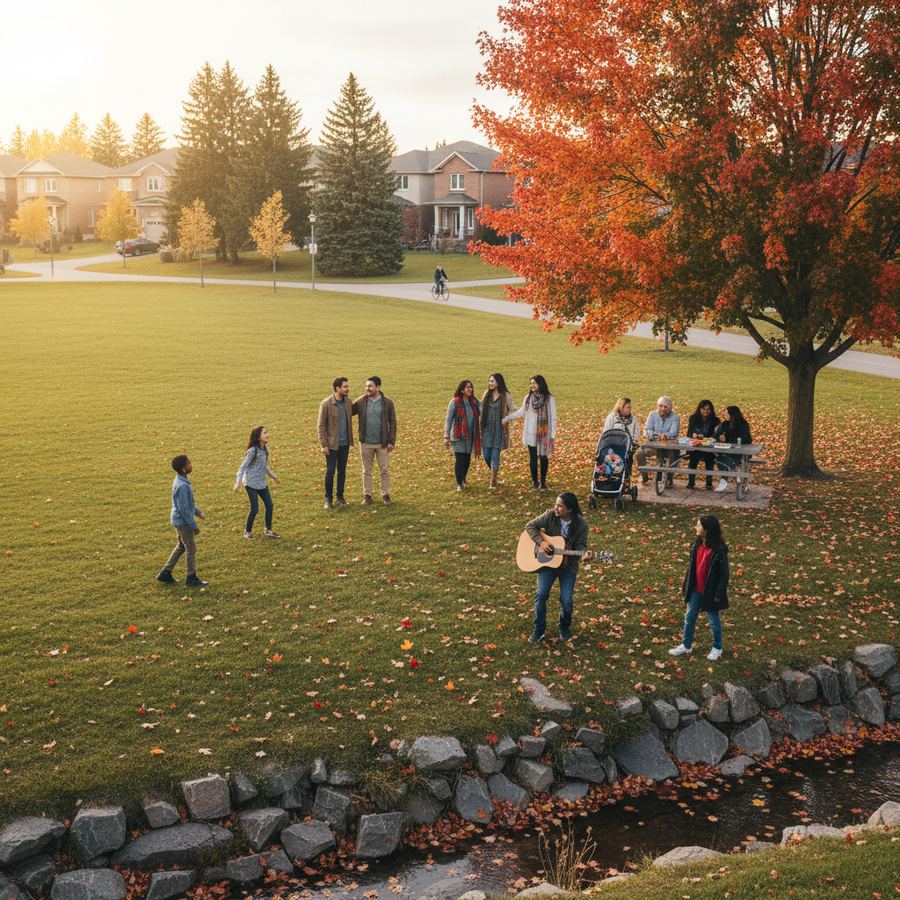
The bilingual character of Orleans intersects with the community's broader diversity to create something culturally rich. Orleans is home to significant Lebanese, Haitian, African, and South Asian communities, among others. Many of these communities are themselves multilingual, with French often serving as a bridge language alongside English and heritage languages. Haitian families, for example, bring both French and Creole into the community fabric. African immigrants from francophone countries like the Democratic Republic of Congo, Cameroon, and Senegal find a French-speaking environment where they can access services and build social connections in their language.
This multilingual diversity enriches the dining scene, the schools, the community events, and the social texture of Orleans in ways that a monolingual suburb simply cannot match. The cultural festivals, the diversity of cuisines available at local restaurants, and the variety of languages heard at Petrie Island beach on a summer afternoon are all reflections of this layered linguistic landscape.
Business and Bilingualism
For business owners, the bilingual market in Orleans presents both opportunity and expectation. Businesses that can serve customers in both French and English have a natural advantage in this community. Signage, marketing materials, and customer service in both languages are not legally required for most private businesses in Ontario, but they are strongly appreciated and can meaningfully affect customer loyalty. Many successful Orleans businesses make bilingual service a core part of their identity, recognizing that it reflects and respects the community they serve.
The business community in Orleans includes a healthy mix of francophone-owned and anglophone-owned enterprises, along with many immigrant-owned businesses that bring additional language capabilities. Networking events and business associations in the area typically operate bilingually. For entrepreneurs considering Orleans as a location for a new venture, understanding and embracing the bilingual character of the customer base is an important strategic consideration.
Raising Bilingual Children
Perhaps the most compelling aspect of the bilingual advantage for families is the opportunity to raise children who are comfortable in both of Canada's official languages. In most of Ontario, bilingualism requires deliberate effort: French immersion at school, French-language media at home, and perhaps summer camps or exchange programs. In Orleans, the environment does much of the work. Children growing up here encounter French naturally, through their friends, their neighbours, their sports teams, and their daily surroundings. This does not replace formal instruction, but it provides a context that makes school-based language learning far more effective and far more likely to stick.
Bilingual graduates have access to a wider range of university programs (including the University of Ottawa, which is officially bilingual), broader employment options, and a deeper understanding of Canadian culture. For families who value these outcomes, Orleans offers one of the most supportive environments in Ontario.
A Genuinely Bilingual Place
Orleans' bilingualism is not a marketing slogan or a government designation. It is the product of decades of community development, demographic history, and daily practice by hundreds of thousands of residents. It shapes the schools, the local services, the community events, and the culture of the neighbourhoods in ways both visible and subtle. For newcomers, it is one of the strongest reasons to consider Orleans over other communities in the Ottawa area. And for longtime residents, it is one of the things that makes this place feel distinctly like home.
Learn more about what makes Orleans unique in our Why Orleans guide.